Sales spike only during discounts.
When discounts stop, orders slow because price is doing too much of the work.

60-second audit: See why cheaper lookalikes steal your buyers.
When discounts stop, orders slow because price is doing too much of the work.
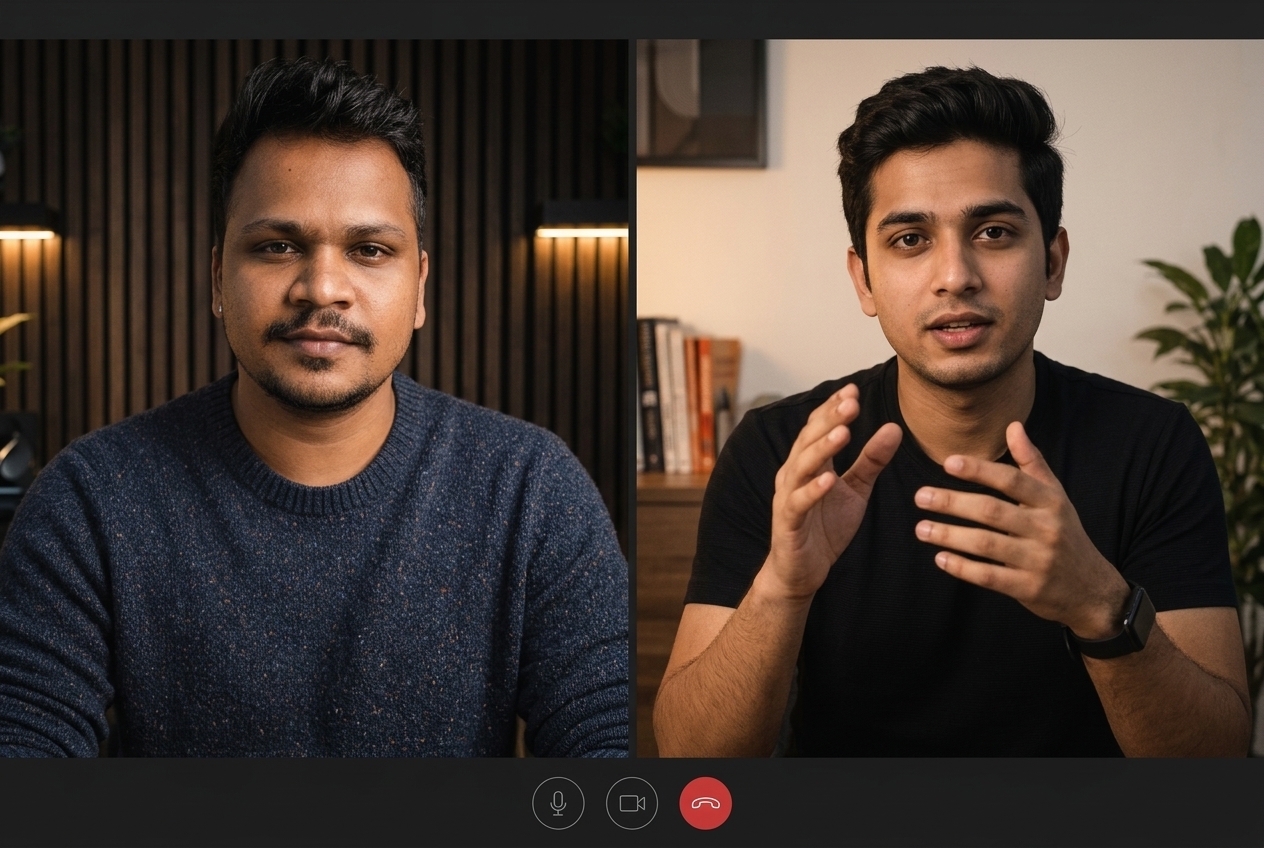
On a working call, we scope the priority product and buying surface, form the working team, and capture the current position, evidence, and constraints.
We choose the market shelf that makes the value obvious, then decide whether to win head to head, own a focused niche, or create a new game.
Why the product is hard to choose on the current buying surface.
Customers, alternatives, proof, and review patterns that hold up.
The reason to choose, with the trade-offs that come with it.
A hierarchy the page, listing, and team can use without freelancing.
The agreed page or marketplace listing with the new position applied.
Source files, change notes, checks, and the first feedback loop.
You own the brand and a proven physical product, not a resale catalogue.
You already have live sales, real competitors, and customer evidence to diagnose.
You sell online through your store, Amazon, Flipkart, or another marketplace.
You can authorize updates on one priority buying surface.
You have one product or product line that needs a clearer reason to choose.
Idea-stage brands without a live product or customers.
New sellers without enough sales or evidence to diagnose the buying decision.
Resellers, dropshippers, and marketplace arbitrage businesses.
Digital products, courses, SaaS, or service businesses under this public offer.
Teams that only want ads, SEO, or a guaranteed conversion lift.
For a decade, I have worked in digital and product marketing across SaaS, D2C, and B2B, sitting close to C-suite teams on brand, positioning, and growth decisions that had to hold in market.
As a product marketer, I helped scale a SaaS product from 80K to 2M users. That work was not theory. It was live markets, real buyers, and pressure to make the product easier to understand and choose.
Outside the engagement room, I break down brand strategy, positioning, and product building for a large Tamil-speaking audience across Instagram, YouTube, and Facebook. That distribution keeps me close to how founders and operators actually think when a product looks replaceable.
Through 10th Layer, I take that same rigor into a bounded engagement: diagnose the choice problem, lock the position, build the messaging, and implement it on the page or listing where customers decide.
No. The work is for any brand that owns a proven physical product and can authorize changes on a priority buying surface. That can be your D2C store, Amazon, Flipkart, or another marketplace listing.
Then we say so. Positioning is not the cause of every weak conversion. The engagement starts with diagnosis. If the evidence points elsewhere, we will not force a positioning project as the answer.
No. We control positioning, messaging, proof, and the implementation of those on the agreed surface. We do not promise sales outcomes outside that scope.
One priority product or product line on one agreed buying surface. That usually means the page or listing structure, copy hierarchy, proof graphics, and responsive implementation where access allows. Not the whole catalogue.
The delivery method is ten working days once product assets, customer evidence, platform access, and the working team are ready. Launch still depends on feedback and approvals arriving on schedule.
Access to the priority surface, the product and brand context, and evidence customers already leave behind: reviews, questions, objections, sales notes, and existing creative. Without that, positioning becomes guesswork.
No. 10th Layer is a positioning and implementation engagement. Ads, SEO, and paid acquisition stay with your team or another partner.
Strategy consultants often stop at a document. Many agencies start at design or traffic. We connect both ends: find the reason to choose, build the messaging system, and put it live where the customer decides.
Praveen Simon leads the engagement. You work with the person who owns the method, the messaging, and the implementation direction, not a handoff chain of juniors guessing the brief.
One positioning and messaging system is built first. It is then applied to the priority surface agreed in scope. Additional pages, listings, or channels can be scoped after that core system is locked.